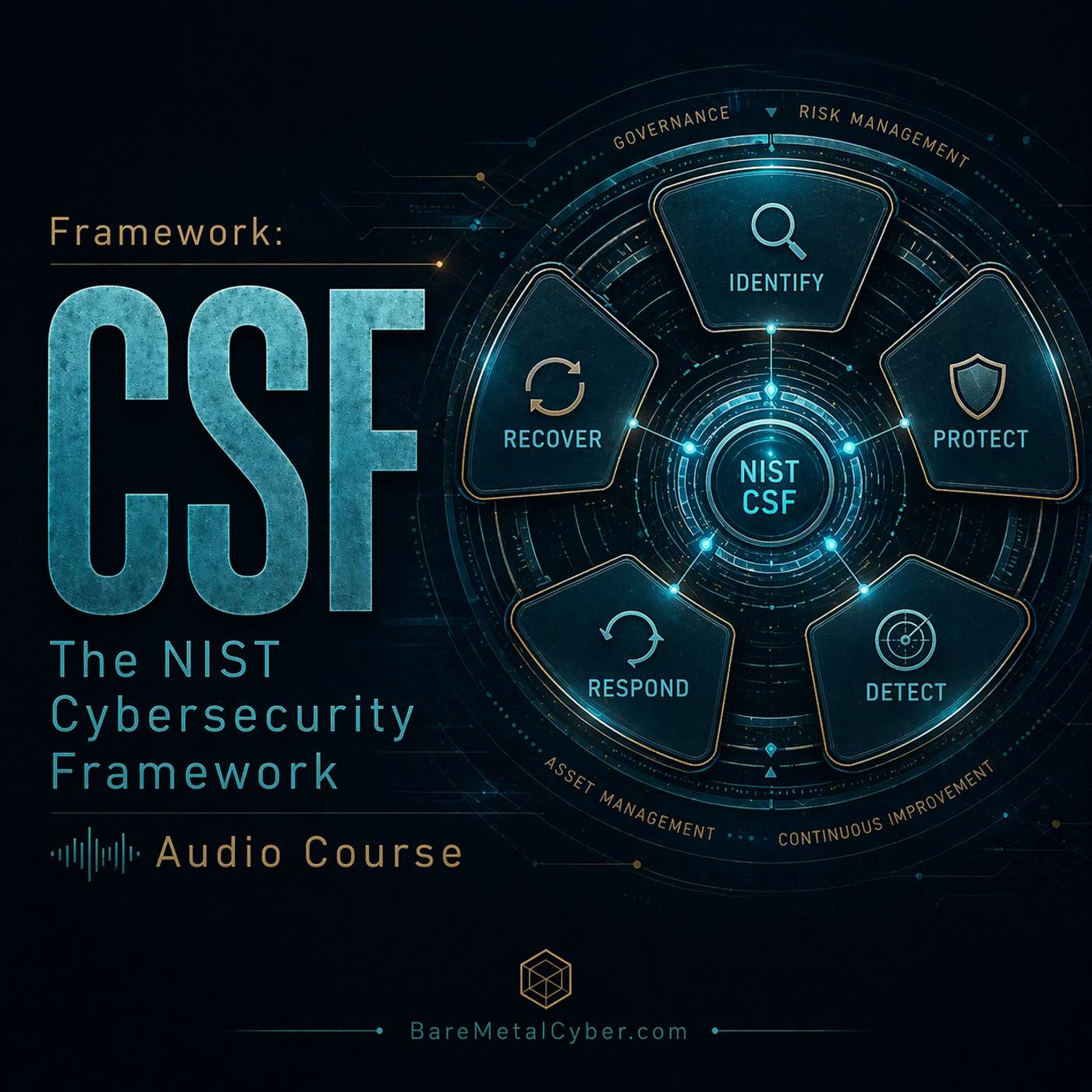
Framework: The NIST Cybersecurity Framework (CSF)
Jason Edwards
Publishing Details
Contact & Outreach
About This Podcast
Podcasting 2.0 Features
Explore Statistics
Recent Episodes
Welcome to Framework: The NIST CSF
Dive into a fast, no-fluff overview of what this podcast delivers, who it’s for, and how each episode helps you level up with practical, real-world takeaways. In this trailer, you’ll hear the show’s…
RC.CO-04 - Sharing Public Recovery Updates
RC.CO-04 involves sharing public updates on incident recovery using approved channels and messaging, such as breach notifications or preventative steps, to inform affected parties or the broader…
RC.CO-03 - Communicating Recovery Progress
RC.CO-03 ensures recovery activities and progress are shared with designated stakeholders—like leadership and suppliers—consistent with response plans and agreements. This includes regular updates on…
RC.RP-06 - Declaring Recovery Completion
RC.RP-06 declares the end of recovery once predefined criteria are met, finalizing the process with a comprehensive after-action report detailing the incident, actions, and lessons learned. This…
RC.RP-05 - Confirming System Restoration
RC.RP-05 verifies the integrity of restored assets—checking for lingering threats or root causes—before returning systems to production, confirming normal operations. This involves testing…
RC.RP-04 - Restoring Critical Functions Post-Incident
RC.RP-04 considers critical mission functions and cybersecurity risks to define post-incident operational norms, using impact records to prioritize restoration order. This involves collaboration with…
RC.RP-03 - Verifying Backup Integrity
RC.RP-03 ensures backups and restoration assets are checked for integrity—free of compromise or corruption—before use in recovery efforts. This verification prevents reintroducing threats or using…
RC.RP-02 - Prioritizing Recovery Actions
RC.RP-02 involves selecting, scoping, and prioritizing recovery actions based on incident response plan criteria and available resources, adapting as needs shift. This ensures efforts focus on…
RC.RP-01 - Launching Incident Recovery Efforts
RC.RP-01 initiates the recovery phase of the incident response plan once triggered, ensuring all responsible parties are aware of their roles and required authorizations. This begins during or after…
RS.MI-02 - Eradicating Incident Threats
RS.MI-02 ensures incidents are fully eradicated, removing threats like malware or unauthorized access through automated system features or manual responder actions. This can involve third-party…
RS.MI-01 - Containing Cybersecurity Incidents
RS.MI-01 focuses on containing incidents to prevent their expansion, using automated tools like antivirus or manual actions by responders to isolate threats. This can involve third-party assistance…
RS.CO-03 - Sharing Information with Stakeholders
RS.CO-03 involves sharing incident information with designated stakeholders—both internal, like leadership, and external, like ISACs—consistent with response plans and agreements. This includes…
RS.CO-02 - Notifying Stakeholders of Incidents
RS.CO-02 ensures timely notification of internal and external stakeholders—like customers, partners, or regulators—about incidents, following breach procedures or contractual obligations. This…
RS.AN-08 - Assessing Incident Magnitude
RS.AN-08 estimates and validates an incident’s magnitude by assessing its scope and impact, searching other targets for indicators of compromise or persistence. This involves manual reviews or…
RS.AN-07 - Preserving Incident Data Integrity
RS.AN-07 focuses on collecting and preserving incident data and metadata—such as source and timestamps—using chain-of-custody procedures to ensure integrity. This comprehensive gathering supports…
RS.AN-06 - Recording Investigation Actions
RS.AN-06 ensures that all investigative actions during an incident—like system checks or containment steps—are meticulously recorded, with integrity and provenance preserved. This involves immutable…
RS.AN-03 - Investigating Incident Causes
RS.AN-03 conducts detailed analysis to reconstruct incident events, identify involved assets, and pinpoint root causes, such as exploited vulnerabilities or threat actors. This includes examining…
RS.MA-05 - Initiating Incident Recovery
RS.MA-05 applies predefined criteria to determine when to shift from response to recovery, based on incident characteristics and operational considerations. This decision balances containment success…
RS.MA-04 - Escalating Incidents When Needed
RS.MA-04 ensures incidents are escalated or elevated to higher levels of authority or expertise when their complexity or impact exceeds initial handling capabilities. This involves tracking incident…
RS.MA-03 - Categorizing and Prioritizing Incidents
RS.MA-03 categorizes incidents—such as ransomware or data breaches—and prioritizes them based on scope, impact, and urgency, balancing rapid recovery with investigation needs. This detailed review…
Frequently Asked Questions
Framework: The NIST Cybersecurity Framework (CSF) has published 114 episodes since February 2025, covering topics in Education, Technology.
Framework: The NIST Cybersecurity Framework (CSF) is currently dormant with new episodes hourly. Average episode length is 19m.
Sign up on Grep.FM to access contact details for Framework: The NIST Cybersecurity Framework (CSF), including email and social media links.
Similar Podcasts

Deep Questions with Cal Newport
Cal Newport
432 episodes

Mac Geek Gab — Apple Tips, Tricks, and Troubleshooting
Dave Hamilton, Pilot Pete & Adam Christianson
1,145 episodes

The Von Haessler Doctrine
Cox Media Group
1,793 episodes

Podcasting Made Simple
Alex Sanfilippo, PodMatch.com
388 episodes

Hound Dog Podcast Network by The Sportsmen's Empire
Sportsmen's Empire
263 episodes

Simple Pin Podcast: Simple ways to boost your business using Pinterest
Kate Ahl
482 episodes